Aussie Kids Code

Home / Level 03

Level 03 · Master

Challenges worth tackling.

Students apply their skills to more real-world, challenging problems — advanced Python, data science, generative AI, cyber security, PyGame projects, and hands-on robotics and electronics.

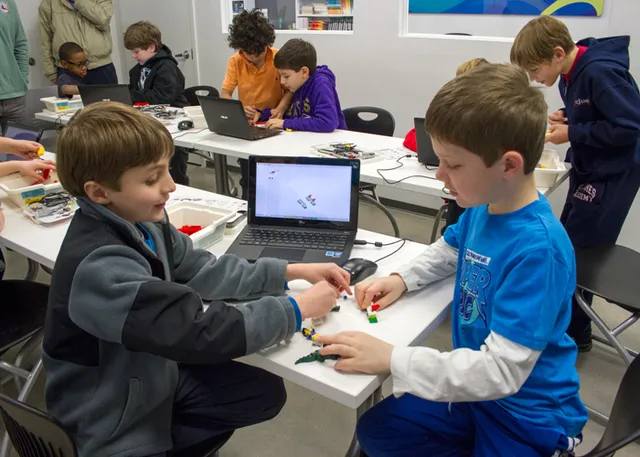
Students building and coding robotics kits in a classroom
Class length
60 minutes, weekly
Delivery
Online · robotics in person
Prerequisite
Confident writing code
Fees
$350 per term
What students explore

The advanced programme.

Students do not take all of these at once. We help you choose the right path based on what your child wants to build.

Python Advanced

Where a script becomes a program others can understand: classes, modules, files, APIs, error handling and testing.
Data Science with Python

Scientific coding and an introduction to machine learning. Real data is messy — that's the lesson.

PyGame

The game loop, collisions, sprites and sound — written from scratch rather than assembled from a palette.

Generative AI

How language models actually work, building something real with an API, and why you still have to check the output.

Cyber Security

Taught from the defender’s perspective so your child can recognise attacks aimed at them or their family.

Electronics & Robotics

Circuits, sensors, motors and a robot that has to survive the real world. These sessions run in person.

Code that moves something physical fails in ways screen code never does — which is exactly why it's worth doing.
Why robotics stays in person
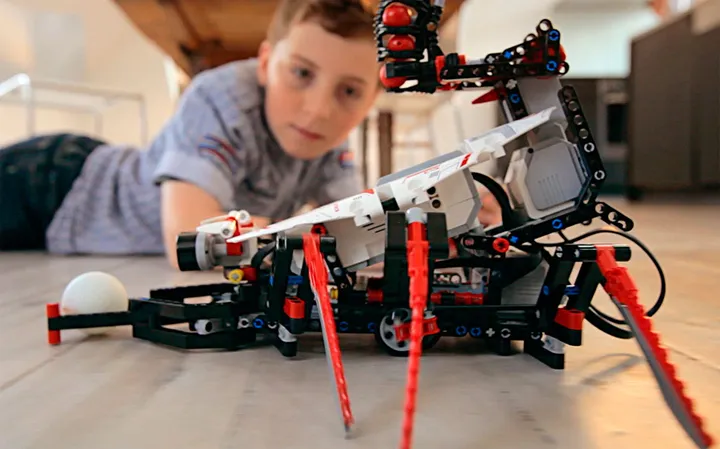
A robot built and programmed by students
What students explore

The Master curriculum, in full.

Filter by how it's delivered, then open any topic to see what your child actually builds.

Delivery
Where code stops being a script and becomes a program someone else could read.
  • Classes, modules and reading other people's code
  • Files, APIs and error handling that doesn't hide problems
  • Writing tests, and why they save time rather than cost it
Real data is messy, and that's the lesson. Students load a dataset they care about and find something in it that nobody told them was there.
  • Loading, cleaning and questioning data
  • Charts that tell the truth
  • An introduction to machine learning
The game loop, collision detection, sprites and sound — written from scratch rather than dragged from a palette.
  • Game loop, frame rate and input handling
  • Collision detection and physics
  • A finished, playable game they can share
Every child now has AI on their phone. This is the difference between a kid who prompts and a kid who understands what's happening underneath.
  • How language models actually work, without the hype
  • Building something real with an API
  • Hallucinations, bias and why you still have to check
Taught from the defender's side: how attacks work, so your child recognises one aimed at them or at your family.
  • How passwords are broken, and what actually protects them
  • Phishing, social engineering and safe habits
  • Encryption basics — the maths that keeps secrets
Code that moves something in the physical world fails in ways screen code never does — which is exactly why it's worth doing. These sessions run in person.
  • Circuits, sensors and motors
  • Programming a robot to navigate and react
  • Debugging when the problem might be the hardware
Getting a project off your own laptop and onto the internet, where other people can use it — the step that turns an exercise into a thing that exists.
  • Deploying a project so it has a real URL
  • Where data is stored, and who can see it
  • Why "it works on my machine" isn't finished

No topics match that combination — try Any delivery.

Try it

Write Python. Watch it draw.

A loop, a condition, some arithmetic and a turtle. Change the numbers, press Run, and see what happens — this runs entirely in your browser.

spiral.py
Turtle canvas

Things to try

  • Change right(100) to right(89) — completely different shape
  • Change range(40) to range(120)
  • Swap the colour names: orange, teal, violet, sun, pink, blue, green
  • Add penup() before the loop and pendown() inside it

What this demo supports

Variables, arithmetic, for and while loops, if /elif / else, print() and the turtle commands (forward, right, left, color,pensize, penup, pendown, goto,circle, dot). Real classes use the full language.

Practicalities

How Master runs.

  1. First day in person

    We work out what your child wants to build, and choose the path from there.

  2. Weekly, 60 minutes, online

    Ten weeks to a term, three to five kids per group, always guided by our team.

  3. Robotics and electronics in person

    Hardware sessions run in Piara Waters. Everything else in Master runs online.

  4. An hour of practice, minimum

    At this level students are usually well past the minimum, because the projects are genuinely theirs.

Is my child ready?

Master assumes your child is comfortable writing code by hand — typically afterUpskill, or coming in already writing Python or JavaScript. If you're not sure, the four-question check will place them, and we confirm it together on the first day.

Where it leads

Many of our 400-plus former students now study or work in computer engineering fields. That isn't the goal — computational thinking is — but it's a fair indication that the advanced track is pitched at the right level.

The team behind Master

  • Chamila Rathnayake — founder, computer engineering professional, 16 years in software, 10 years consulting in Perth, machine learning and AI enthusiast
  • Chris Ranasinghe — founder, computer engineering professional, 18 years in software, 12 years consulting in Perth

Meet the whole team →

Questions parents ask

Master, answered.

Master assumes your child is comfortable writing code by hand, typically afterUpskill, or coming in already writing Python or JavaScript. Not sure? The four-question check will place them, and we confirm it together on the first day.
Some things need to be held to be understood — wiring a circuit or watching a motor respond to code doesn't translate over a screen. Hardware sessions run in Piara Waters; everything else in Master runs online.
Advanced Python into data science, generative AI and cyber security, games built in PyGame, plus robotics and electronics in person. The path is chosen with your child on the first day.
The focus is on how the tools actually work and where their limits are, guided by our team — not unsupervised general use. It's taught with the same graduated, hands-on approach as the rest of the curriculum.
There's no "Level 4" — by this point students are usually driving their own projects. Many of our 400-plus former students go on to study or work in computer engineering, though that's a side effect of computational thinking, not the goal itself.
Enrolments open for next term

Give them something hard to do.

Tell us about your child and the times that suit you. We confirm the level together on the first day.